Contracts are the backbone of most business relationships. Whether companies are hiring vendors, forming partnerships, licensing intellectual property, or providing services, contracts define the expectations, rights, and responsibilities of each party involved. When structured properly, they create clarity and accountability. However, poorly drafted agreements often lead to disputes, operational disruptions, and significant financial exposure.
Experienced lawyers understand that contracts are not merely documents filled with legal language. Instead, they are strategic tools used to manage risk and prevent conflicts before they arise. Through careful structuring and specific clauses, lawyers design agreements that anticipate potential problems and allocate responsibility appropriately.
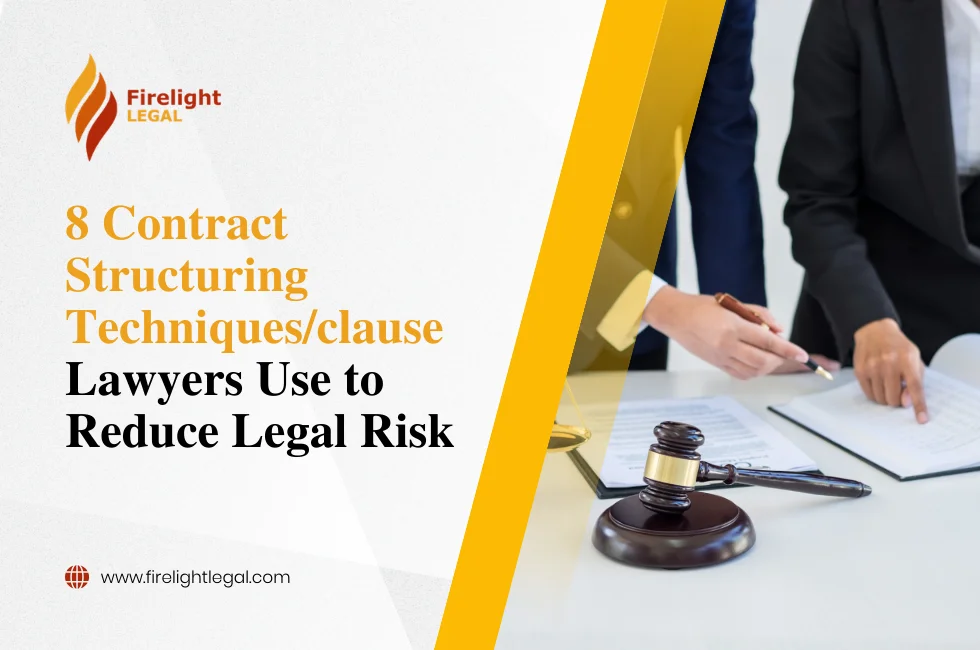
8 Contract Structuring Techniques
- Clear Scope of Work Clause
One of the most critical components of any contract is the scope-of-work clause. This provision clearly defines the services, obligations, and deliverables each party must provide under the agreement. Without a precise scope of work, even well-intentioned parties may interpret their responsibilities differently, leading to confusion and conflict.
Ambiguity in obligations is one of the leading causes of contract disputes. Lawyers address this risk by drafting detailed descriptions of the services or products involved. They also include performance standards, specifications, and quality expectations to ensure both parties share the same understanding of the required outcomes.
- Limitation of Liability Clause
A limitation of liability clause is a fundamental risk management tool in many commercial contracts. Its primary purpose is to cap the financial exposure of a party if something goes wrong during the performance of the agreement.
Without such a clause, a party may be exposed to unlimited liability, meaning that damages awarded in a dispute could far exceed the value of the contract itself. Lawyers structure limitation clauses to ensure that potential damages remain proportional to the business relationship
- Indemnification Clause
Indemnification clauses play a key role in allocating risk between parties. These provisions require one party to compensate the other for certain losses, claims, or damages that may arise during the course of the contractual relationship.
In essence, indemnification shifts financial responsibility for specific risks to the party that is best positioned to control or prevent those risks. Lawyers carefully design these clauses to cover situations where legal claims may arise from the conduct, products, or services of one party.
Indemnification provisions often address third-party claims, intellectual property infringement, regulatory violations, and negligence or misconduct. For instance, if a vendor supplies software to a client, the vendor may indemnify the client against claims alleging that the software infringes on another company’s copyright or patent rights.
- Termination and Exit Clauses
Contracts are often designed with the expectation that both parties will fulfill their obligations throughout the agreement. However, circumstances can change, and performance may not always proceed as planned. Termination and exit clauses provide structured mechanisms for ending a contract when necessary.
Lawyers typically include several types of termination provisions. Termination for cause allows a party to end the agreement if the other party breaches the contract. Termination for convenience provides flexibility by allowing a party to exit the contract without breach, usually with advance notice.
- Dispute Resolution Clauses
Disagreements are sometimes unavoidable in commercial relationships. A dispute resolution clause establishes the process parties must follow when conflicts arise, ensuring that disputes are addressed efficiently and fairly.
Lawyers often structure these clauses using a multi-step approach. The first step may require the parties to attempt negotiation in good faith. If negotiation fails, the contract may require mediation, where a neutral third party helps facilitate a resolution.
- Force Majeure Clause
A force majeure clause protects parties when extraordinary events make it impossible or impractical to fulfil contractual obligations. These events are typically beyond the reasonable control of the parties involved.
Common force majeure events include natural disasters, wars, political instability, government actions, labour strikes, and major supply chain disruptions. In recent years, many contracts have also been updated to specifically include pandemics and government-imposed lockdowns.
- Confidentiality and Data Protection Clauses
In modern business relationships, companies frequently exchange sensitive information. Confidentiality and data protection clauses are designed to safeguard this information and prevent unauthorized disclosure.
Lawyers begin by defining what constitutes confidential information. This may include trade secrets, business strategies, customer data, financial information, and proprietary technology. The clause then establishes the obligations of each party to protect this information using appropriate safeguards.
- Governing Law and Jurisdiction Clause
When parties from different regions or countries enter into a contract, legal questions may arise regarding which laws apply to the agreement. A governing law and jurisdiction clause resolves this uncertainty by specifying the legal system that will interpret the contract and the courts or tribunals that will handle disputes.
Without such a clause, disagreements may trigger complex legal arguments about which jurisdiction should apply. This uncertainty can significantly increase litigation costs and delay the resolution of disputes.
Conclusion
Contracts are far more than formal business documents—they are powerful tools for managing legal and financial risk. When carefully structured, they clarify expectations, allocate responsibility, and provide mechanisms for resolving disputes efficiently.
Experienced lawyers approach contract drafting strategically, anticipating potential problems and addressing them through well-designed clauses. Techniques such as clear scope definitions, liability limitations, indemnification provisions, and structured dispute resolution can significantly reduce the likelihood of costly conflicts.